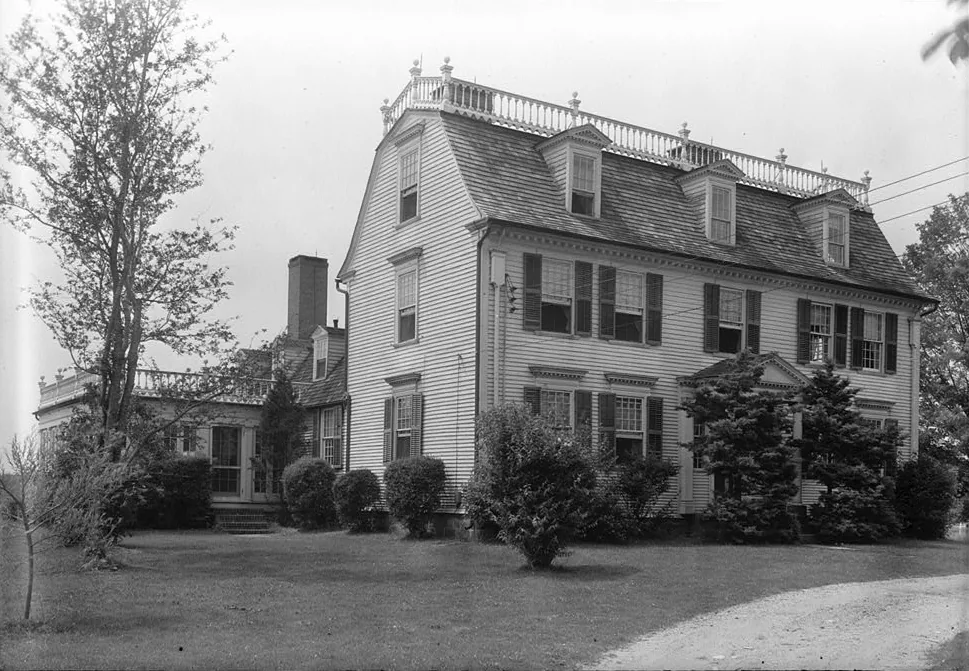
Built by a Colonel, for His Son
The house was built in 1790 by Colonel Henry Champion, a Revolutionary War officer, as a home for his son, General Henry Champion. It was designed by William Spratt, the same house joiner who designed the Epaphroditus Champion House in East Haddam and the Deming House in Litchfield. General Henry Champion made the house his home for the rest of his life, until his own death in 1836 — the 46-year tenure that gives the house the name it carries today. Colonel Champion, who commissioned the house, died in 1797.
Colonel Henry Champion — Feeding an Army
Colonel Henry Champion (1723–1797) was born in East Haddam, the grandson of an original settler of Saybrook. He entered the colonial militia in 1741, reached the rank of Lieutenant by 1750, and served in the French and Indian War before the Revolution began. In 1775, the Connecticut General Assembly selected him as a Commissary for the war effort, tasked with procuring goods and supplying the Continental Army — work that put him in close, regular contact with General Washington and Connecticut Governor Jonathan Trumbull. By 1778, he was appointed sole Commissary General for the Eastern Department.
His best-known act came in the brutal winter of 1777–78: working with his son Epaphroditus, he personally drove a herd of cattle 300 miles to reach the starving Continental Army at Valley Forge, purchased at great expense and eaten by the troops within five days of arrival.
Family tradition holds that his daughter, Deborah Champion, once carried dispatches on horseback from New London to General Washington in Boston — passing safely through British lines, the story goes, because she was a woman.
General Henry Champion — A Life at the House
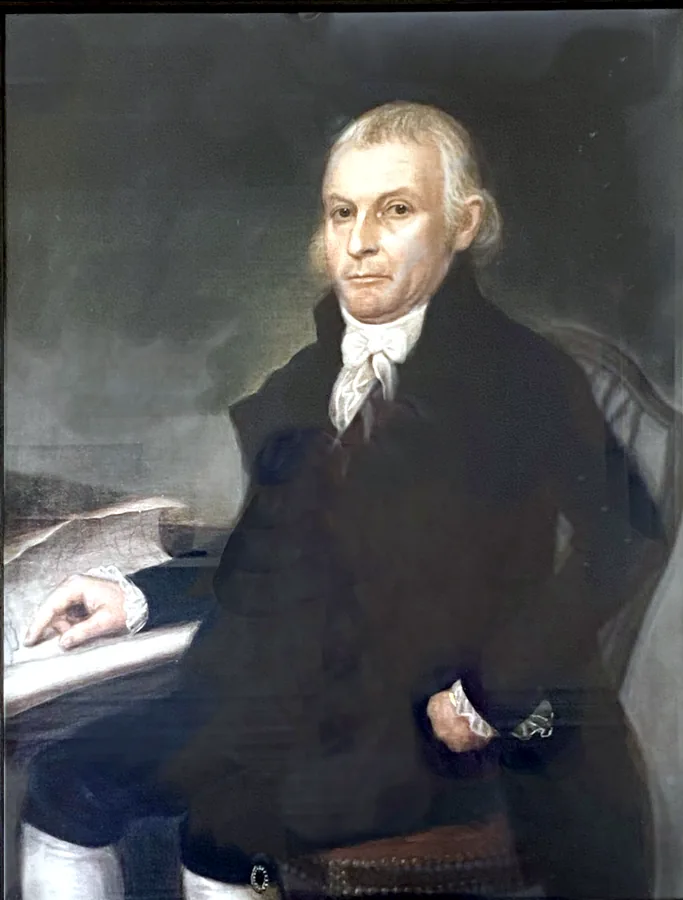
General Henry Champion (1751–1836) was born and died in this part of Colchester, then known as Westchester. He answered the Lexington Alarm in 1775 and fought at Bunker Hill. In 1779, as acting major of the First Battalion, Light Brigade, he served under Washington's direct command at the capture of Stony Point — a moment he marked every year afterward, hosting a "Stony Point Day" celebration at this house each July 15 for the rest of his life.
After the war, he remained active in public life: a deputy to the Connecticut General Assembly, an Assistant to the Governor, a judge on the state's Supreme Court of Errors, and a deacon of the Westchester church. He was also a major investor in the Connecticut Land Company — the towns of Champion, New York and Champion, Ohio are named for him, and his portrait at the Wadsworth Atheneum shows him with a map of the Western Reserve lands he helped settle.
He is buried in Westchester Cemetery on Cemetery Road in Colchester, his grave marked by a classical white marble obelisk.
An Architectural Record
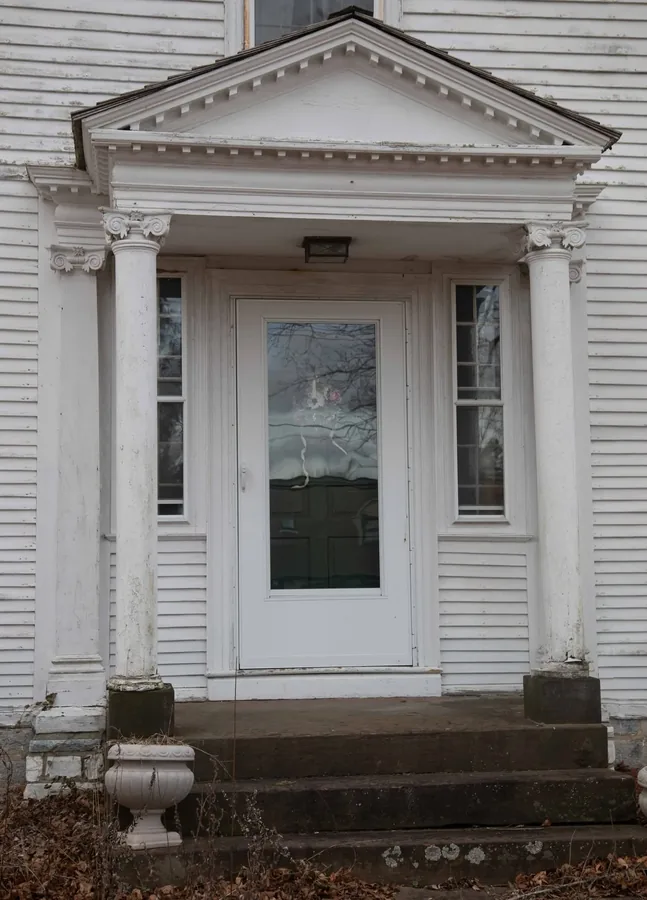
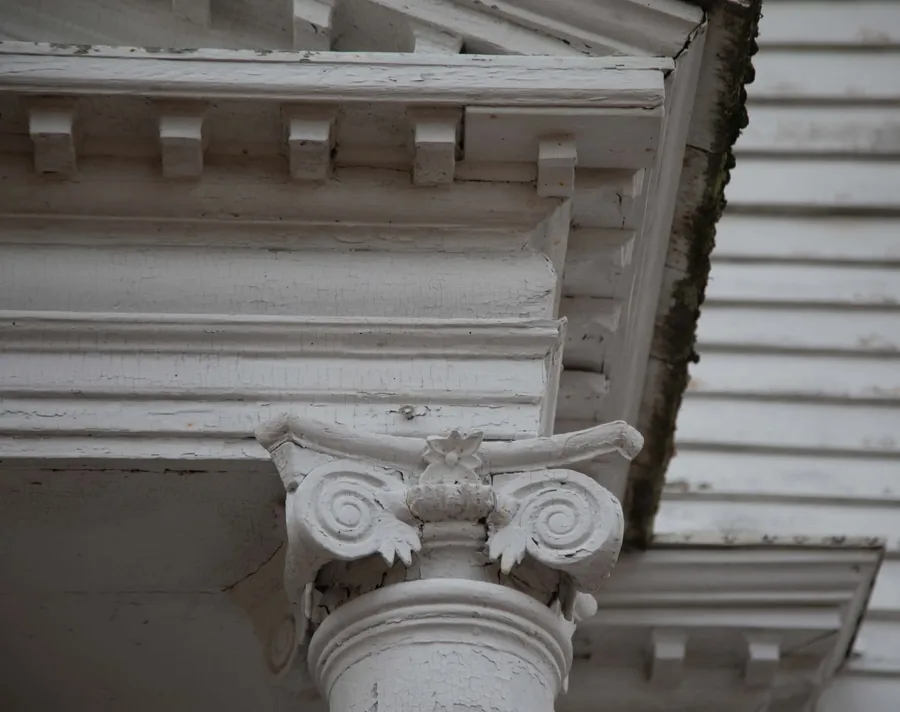
The house's Federal-period details are well documented in its 1972 National Register nomination: a gambrel roof with a long rear slope nearly reaching a lean-to, twin brick chimneys, an Ionic-columned and triangular-pedimented entry portico, matching pedimented dormers, and twelve-over-twelve sash windows throughout the main house. A one-and-a-half-story ell extends to the south, later fitted with a conservatory. A historic stone wall with iron gates still marks the property's edge along the road.
Spratt's own story is nearly as improbable as the house he built. A Scottish-born soldier in the British Royal Artillery, he was captured at the 1777 Battle of Saratoga and spent three years as a prisoner of war in Hartford and Farmington before choosing to stay in Connecticut rather than return home. He went on to design some of the region's finest Federal and Georgian houses, including “The Terraces,” General Epaphroditus Champion's riverside estate in East Haddam, still admired for its sweeping stone terraces above the Connecticut River.
Nationally Recognized
The Champion House holds two federal historic designations. It was added to the National and State Registers of Historic Places on October 10, 1972 (NR reference #72001323). It's also a stop on the Washington–Rochambeau Revolutionary Route, a National Park Service–designated National Historic Trail retracing the march of the Continental and French armies in 1781 and 1782.
For Educators
Bring This House Into the Classroom
Teaching local history or the American Revolution? Download a free one-page classroom resource on the Champion family, the house's Federal-period architecture, and its connection to the Washington–Rochambeau Revolutionary Route — including a timeline and discussion questions for students.
Download the Classroom Resource (PDF)Sources / Further Reading
Much of this history comes from the Colchester Historical Society's own research on the Champion family, along with the original 1972 National Register nomination. For more, visit the Colchester Historical Society. Additional archival photographs of the house, taken for the Library of Congress's Historic American Buildings Survey (HABS CT-143), are available through the Library of Congress.